

How Much Protein Is in 4 Eggs? Four large eggs contain approximately 25–26 grams of complete protein and around 280–320 calories. If you are searching for 4 eggs protein, four eggs are an excellent source of high-quality protein for muscle gain, weight loss, and everyday nutrition.
If you’ve ever wondered whether four eggs are too much or just enough, you’re not alone. Whether you’re rushing to work, preparing breakfast for your family, heading to the gym, or simply trying to eat healthier, eggs are one of the easiest and most affordable protein-rich foods available.
A friend of mine joined a gym and started eating four boiled eggs every morning because someone told him it was the perfect muscle-building breakfast. After a few weeks, he asked, “Am I getting enough protein, or should I eat more?” That’s when I realized how much confusion exists around something as common as eggs.
The truth is, eggs are more than just a convenient breakfast. They provide high-quality complete protein, healthy fats, vitamins, and minerals that support muscle growth, weight management, and overall health.
In this guide, you’ll learn How Much Protein Is in 4 Eggs, their nutrition facts, health benefits, and whether eating four eggs is the right choice for your health goals. If you’re also curious about the best cooking method, check out our guide on Boiled Egg vs Scrambled Egg: Which Has More Protein?
Table of Contents
What Is the Protein Content in 4 Eggs?
Four large eggs contain approximately 25–26 grams of high-quality complete protein. They also provide healthy fats, vitamin B12, vitamin D, choline, selenium, and other essential nutrients that support muscle recovery, energy production, and overall health.
For most healthy adults, four eggs can be an excellent high-protein meal when included as part of a balanced diet.
How Much Protein Is in 4 Eggs?
A single large egg contains about 6.3 grams of protein.
That means:
4 large eggs = approximately 25.2 grams of protein
The exact amount depends on the egg size.
Egg Size | Protein Per Egg | Protein in 4 Eggs |
Small | ~5 g | ~20 g |
Medium | ~5.5 g | ~22 g |
Large | ~6.3 g | ~25.2 g |
Extra Large | ~7 g | ~28 g |
If you don’t usually eat four eggs, you can compare the nutrition in our guide on How Much Protein Is in 2 Eggs Scrambled?If you’re eating four large eggs for breakfast, you’re getting about 25 grams of complete protein, making them one of the richest natural protein sources.
How Much Protein Is in 4 Eggs? Nutrition Facts
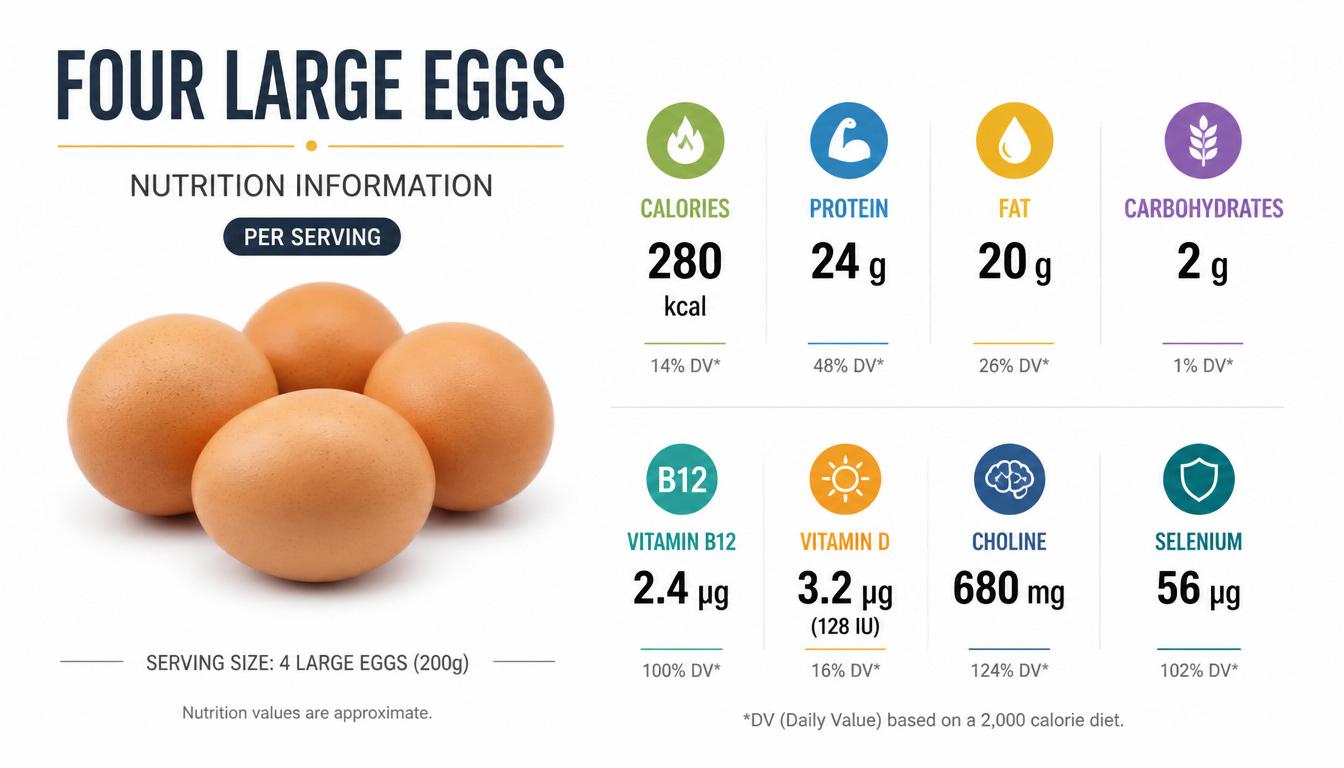
Nutrient | Amount in 4 Large Eggs |
Calories | ~288 |
Protein | ~25.2 g |
Fat | ~20 g |
Carbohydrates | ~1.6 g |
Vitamin B12 | High |
Vitamin D | Good Source |
Choline | Excellent Source |
Selenium | High |
Riboflavin (Vitamin B2) | Good Source |
Along with protein, eggs provide essential vitamins and minerals that support brain function, immunity, energy production, and overall health.
Protein in Egg White vs Egg Yolk (4 Eggs)
Many people believe that all the protein in an egg comes from the egg white, but that isn’t true. Both the egg white and the yolk contain high-quality protein.
- 4 egg whites: Approximately 14–15 grams of protein
- 4 egg yolks: Approximately 10–11 grams of protein
While egg whites provide slightly more protein, the yolks are rich in essential nutrients such as vitamin D, vitamin B12, choline, selenium, and healthy fats. Eating the whole egg gives you the complete nutritional benefits.
Tip: Unless advised otherwise by your healthcare provider, eating whole eggs is generally more nutritious than eating only egg whites.
Why Protein Matters
Protein isn’t just important for athletes. Everyone needs enough protein to stay healthy.
Your body uses protein to:
- Build and repair muscles.
- Maintain healthy bones
- Support the immune system.
- Produce hormones and enzymes.
- Keep skin and hair healthy.
- Help you stay full after meals.
Whether you’re working long office hours, managing household responsibilities, or exercising regularly, protein helps your body recover and function properly. That’s why starting your day with a protein-rich breakfast can keep you energized and satisfied for longer.
Is 25 Grams of Protein from 4 Eggs Enough?
For many adults, 25 grams of protein in one meal is an excellent amount.
For example:
- Office workers may stay full until lunchtime.
- Gym beginners can pair four eggs with whole-grain toast and fruit after a workout.
- Older adults may benefit from spreading protein evenly throughout the day.
However, your total daily protein intake matters more than any single meal. Your ideal protein needs depend on:
- Age
- Body weight
- Activity level
- Fitness goals
- Overall diet
Is the Protein in eggs of high quality?
Yes. Eggs are considered one of the highest-quality protein foods available.
They contain all nine essential amino acids, making them a complete protein source similar to fish, dairy products, and lean meat.
Another advantage is that egg protein is highly digestible, allowing your body to absorb and use it efficiently for muscle repair and overall health.
That’s why eggs are recommended by nutritionists, healthcare professionals, and fitness experts around the world.
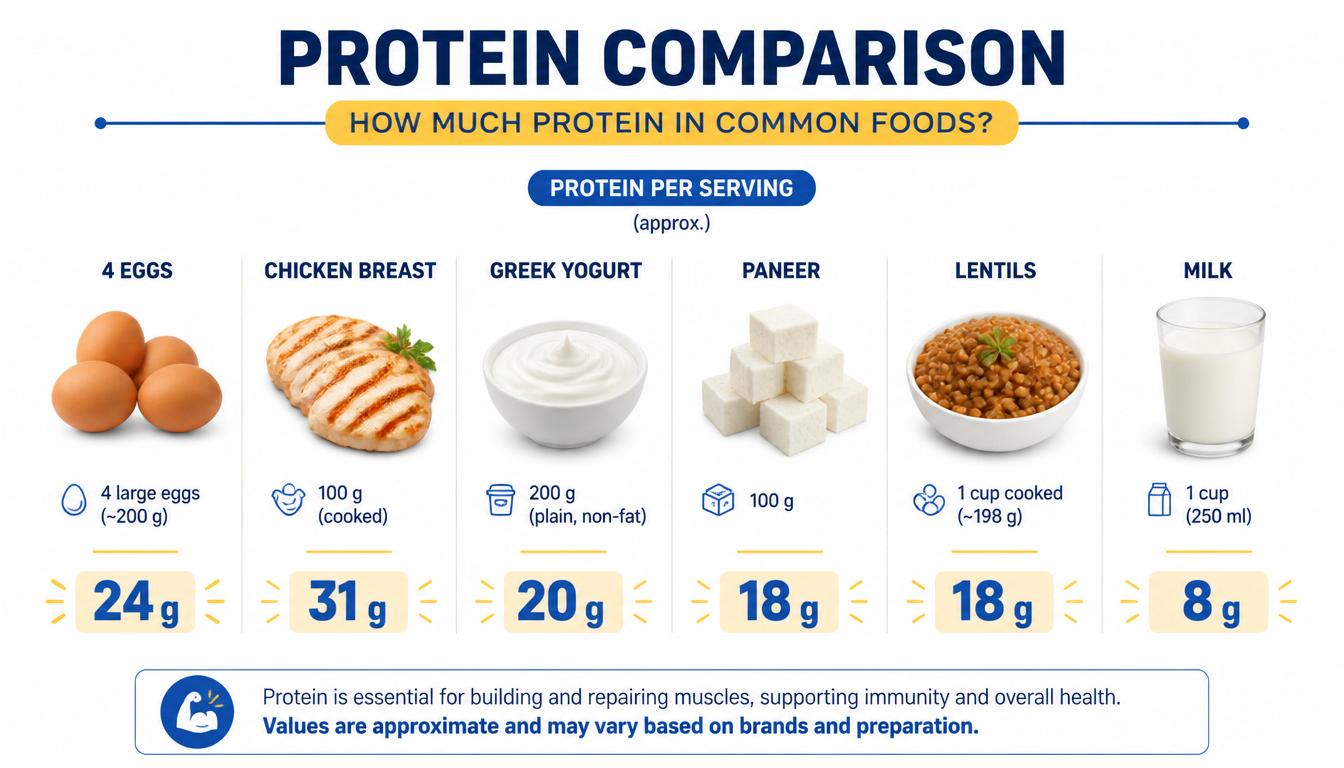
How Much Protein Is in 4 Eggs Compared to Other Foods?
Food Protein
4 Large Eggs 25 g
Chicken Breast (100 g 31 g
Greek Yogurt (200 g) 20 g
Paneer (100 g) 18–20 g
Cooked Lentils (1 Cup) 18 g
Milk (250 ml) 8 g
Does Cooking Change the Protein in 4 Eggs?
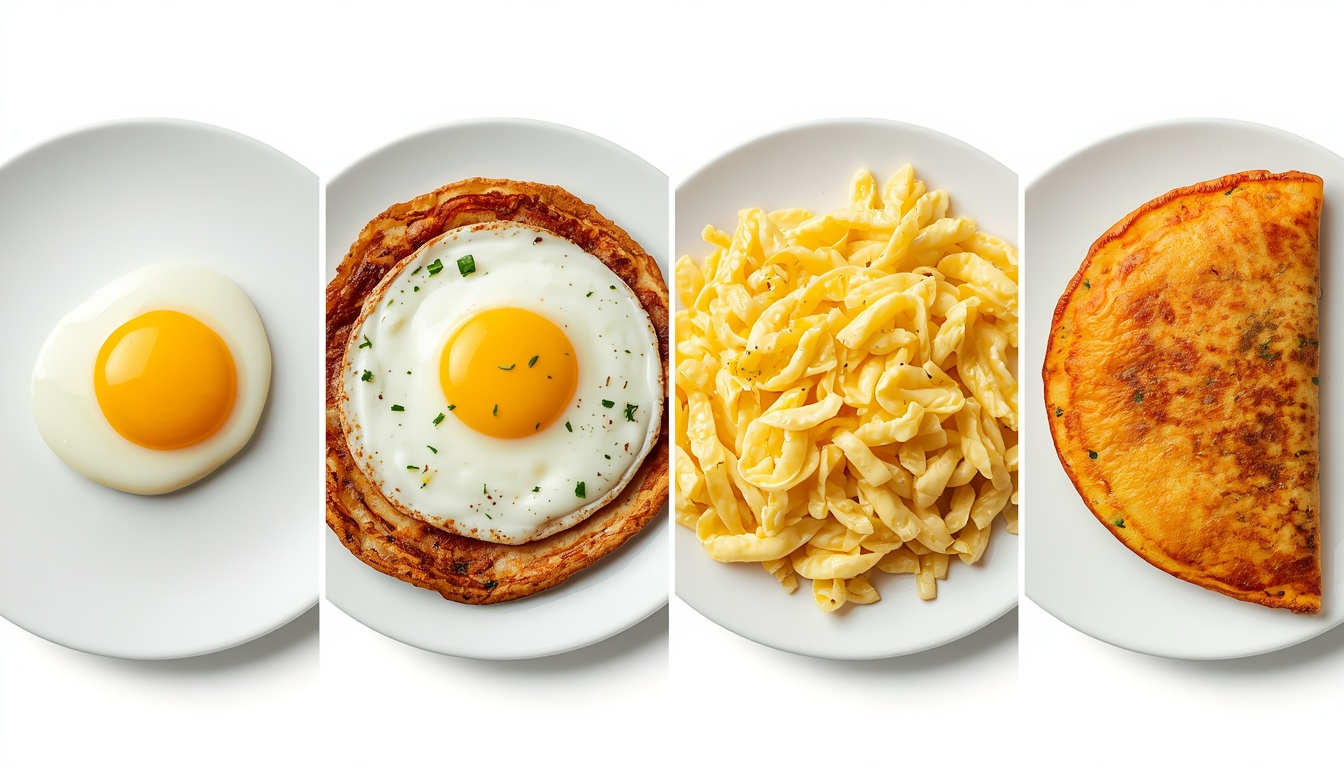
One of the most common questions people ask after learning How Much Protein Is in 4 Eggs is whether boiling, frying, or scrambling changes the protein content.
The simple answer is no.
Cooking changes the texture and taste of eggs, but it doesn’t significantly reduce their protein. Four large eggs still provide around 25–26 grams of protein. What changes is the calorie content when you add oil, butter, cheese, or cream.
Protein in Different Egg Preparations
The protein content remains almost the same regardless of how you cook eggs. However, the calorie content can increase when oil, butter, cheese, or milk is added during cooking. The table below compares the protein and calories in different egg preparations.
Egg Preparation | Protein (4 Large Eggs) | Calories* |
Boiled Eggs | ~25.2 g | ~288 |
Poached Eggs | ~25.2 g | ~288 |
Scrambled Eggs (without butter) | ~25.2 g | ~290 |
Omelette (minimal oil) | ~25.2 g | ~300 |
Fried Eggs (1 tbsp oil) | ~25.2 g | ~400+ |
*Calories vary depending on the amount of oil, butter, cheese, or milk used.
If your goal is weight management, boiled or poached eggs are usually the healthier choice.
How Much Protein Is in 4 Eggs for Muscle Building?

If you’re trying to build muscle, four eggs can be an excellent addition to your diet.
Around 25 grams of complete protein helps support muscle repair after workouts. Eggs also contain all nine essential amino acids your body needs for muscle growth.
For the best results:
- Eat 4 eggs as part of a balanced diet.
- Include other protein sources like chicken, paneer, fish, lentils, or Greek yogurt.
- Combine good nutrition with regular strength training and enough sleep.
Protein is important, but muscle growth also depends on regular exercise and recovery.
How Much Protein Is in 4 Eggs for Weight Loss?

If you’re trying to lose weight, four eggs can be a smart breakfast choice.
Protein helps you stay full longer, making it easier to control hunger and reduce unnecessary snacking.
For example:
Better Breakfast
- Four boiled eggs
- Fresh vegetables
- One slice of whole-grain toast
Less Healthy Breakfast
- Sugary cereal
- Sweetened tea
- Packaged biscuits
The first meal provides more protein and usually keeps you satisfied for longer.
Remember, eggs don’t cause weight loss on their own. They work best with a balanced diet, regular exercise, and healthy lifestyle habits.
If you’re also tracking calories for weight loss, check out our guide on How Many Calories in 2 Scrambled Eggs? Complete Nutrition Facts Guide.
Benefits of Eating 4 Eggs
Adding four eggs to your diet can offer several health benefits.
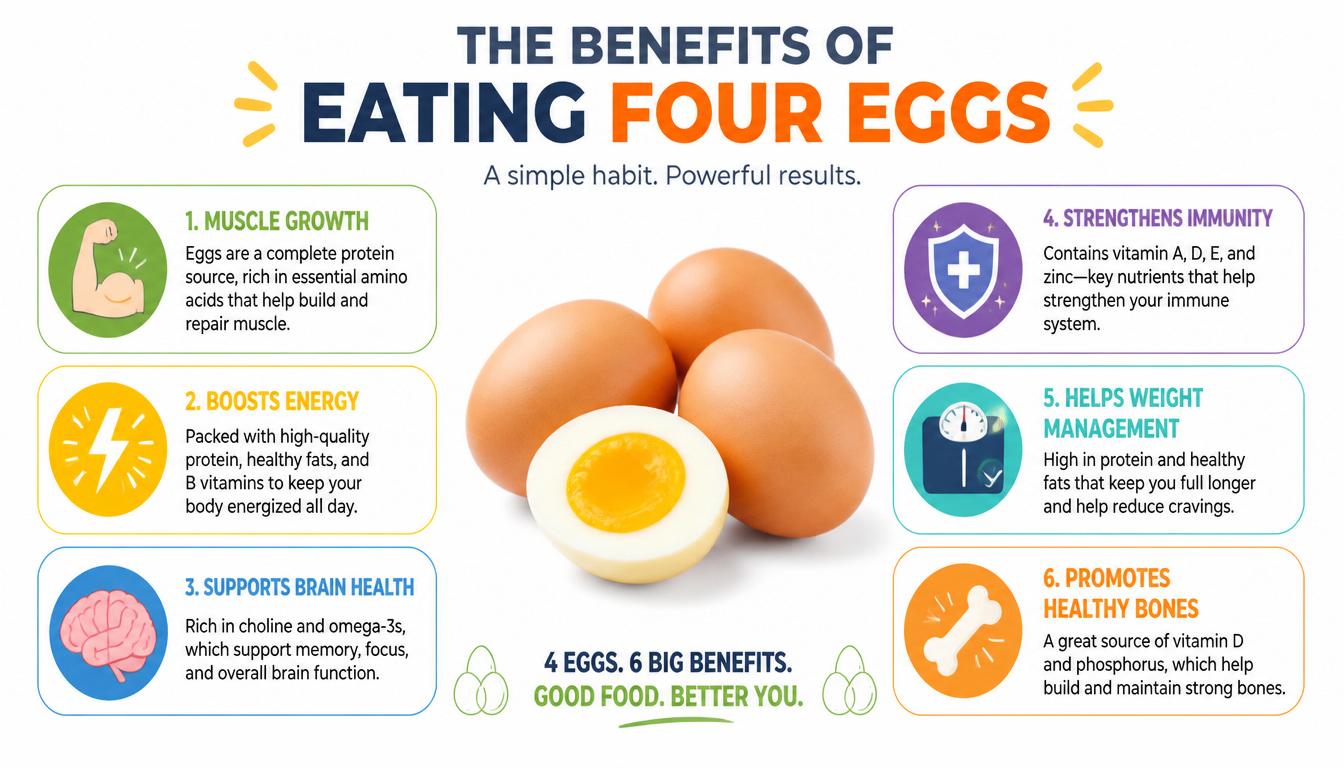
High-Quality Protein
Four eggs provide around 25 grams of complete protein to support muscle growth and tissue repair.
Keeps You Full Longer
Protein-rich meals help reduce hunger and may lower unnecessary snacking.
Rich in Essential Nutrients
Eggs provide important nutrients, including:
- Vitamin B12
- Vitamin D
- Choline
- Selenium
- Riboflavin
- Healthy fats
Budget-Friendly Nutrition
Eggs are affordable, easy to prepare, and available almost everywhere, making them one of the best value-for-money protein foods.
Who Can Benefit Most from Eating 4 Eggs?
Four eggs may be a great choice for:
- Gym-goers and athletes
- Active adults
- Students
- Working professionals
- Healthy adults with higher protein needs
If you have high cholesterol, heart disease, or another medical condition, speak with your healthcare provider before making major dietary changes.
Best Time to Eat 4 Eggs
There’s no perfect time to eat eggs. It depends on your goals.
- Breakfast: Helps keep you full and energized.
- Post-workout: Supports muscle recovery with high-quality protein.
- Lunch or Dinner: A nutritious option when paired with vegetables and whole grains.
Practical Tips
Get the most from your eggs with these simple habits:
- Choose boiled or poached eggs more often.
- Pair eggs with vegetables or whole grains.
- Include other protein-rich foods throughout the day.
- Drink enough water and maintain a balanced diet.
Common Mistakes to Avoid
Avoid these common mistakes:
- Eating only eggs while ignoring other healthy foods.
- Cooking eggs with too much butter or oil.
- Believing that eating more eggs automatically builds more muscle.
- Skipping fruits and vegetables.
- Following nutrition myths without checking reliable sources.
A balanced lifestyle always matters more than any single food.
Are 4 Eggs a Day Healthy?
For most healthy adults, eating 4 eggs a day can be a healthy addition to a balanced diet. Four large eggs provide approximately 25 grams of high-quality protein, along with essential nutrients like vitamin B12, vitamin D, choline, selenium, riboflavin, and healthy fats. These nutrients support muscle recovery, brain function, energy production, and overall health.
However, whether eating 4 eggs daily is right for you depends on factors such as your age, activity level, overall eating habits, and any existing health conditions. If you’re physically active, strength training, or trying to increase your protein intake, four eggs can be an excellent source of complete protein. On the other hand, if you have high cholesterol, heart disease, or another medical condition, it’s best to speak with your healthcare provider before making eggs a daily habit.
To make your meal more nutritious, pair eggs with vegetables, whole grains, or fresh fruit. This combination adds fiber, vitamins, and minerals while helping you stay full for longer. Also, choose healthier cooking methods like boiling, poaching, or using minimal oil when frying.
In short, 4 eggs a day can be a healthy choice for many people when enjoyed as part of a balanced, varied diet and an active lifestyle.
If you’re wondering about the ideal daily intake, read our How Many Eggs Should You Eat Per Day? Safe Daily Limit (2026) guide.
Quick Summary
5 bullets
- 4 Eggs = 25g Protein
- 288 Calories
- Complete Protein
- Good for Muscle Gain
- Good for Weight Loss
Conclusion
Now you know How Much Protein Is in 4 Eggs. Four large eggs provide approximately 25–26 grams of complete protein, making them an excellent choice for muscle recovery, weight management, and overall health.
They also supply important nutrients like vitamin B12, vitamin D, choline, and selenium. Whether you’re a fitness enthusiast, a busy professional, or simply trying to eat healthier, four eggs can fit well into a balanced diet.
The key is to enjoy them alongside vegetables, whole grains, fruits, and other nutritious foods. Small, consistent, healthy habits will always deliver better long-term results than quick diet trends.
Frequently Asked Questions (FAQs)
Item #1
How much protein is in 4 large eggs?
Four large eggs contain approximately 25–26 grams of complete protein.
Item #2
Are 4 eggs enough protein for muscle building?
Yes. Four eggs provide a good amount of protein for one meal, especially when combined with strength training and a balanced diet.
Item #3
Can I eat 4 eggs every day?
Most healthy adults can enjoy four eggs daily as part of a balanced diet. If you have high cholesterol or another medical condition, consult your healthcare provider.
Item #4
Do boiled and fried eggs have the same protein?
Yes. The protein content stays almost the same. Frying mainly increases calories because of the added oil or butter.
Item #5
Are 4 eggs good for weight loss?
Yes. Their high protein content helps increase fullness and may reduce unnecessary snacking when included in a calorie-controlled diet.
Item #6
How much protein is in 4 boiled eggs?
Four large boiled eggs provide approximately 25 grams of high-quality protein. Boiling eggs does not reduce their protein content, making them a healthy and low-calorie protein source.
Item #7
How much protein is in 4 fried eggs?
Four large fried eggs also contain about 25 grams of protein. However, the total calories and fat may increase depending on how much oil or butter is used during cooking.