

If you search for intermittent fasting before and after, most results show dramatic photos. Real life is quieter. Thirty days is long enough to change a few habits and see small shifts on the scale, but not long enough to transform your body.
This guide does not show photos. It explains what many beginners commonly experience each week, what usually changes and what does not, how to track your progress without relying only on the scale, and a simple 14:10 eating day with Indian food. You will also find out who should avoid fasting and when to stop.
It makes no promises, because results depend on your age, sleep, stress, starting weight, medicines, and above all on what you eat inside your eating window.
Table of Contents
What Is Intermittent Fasting?
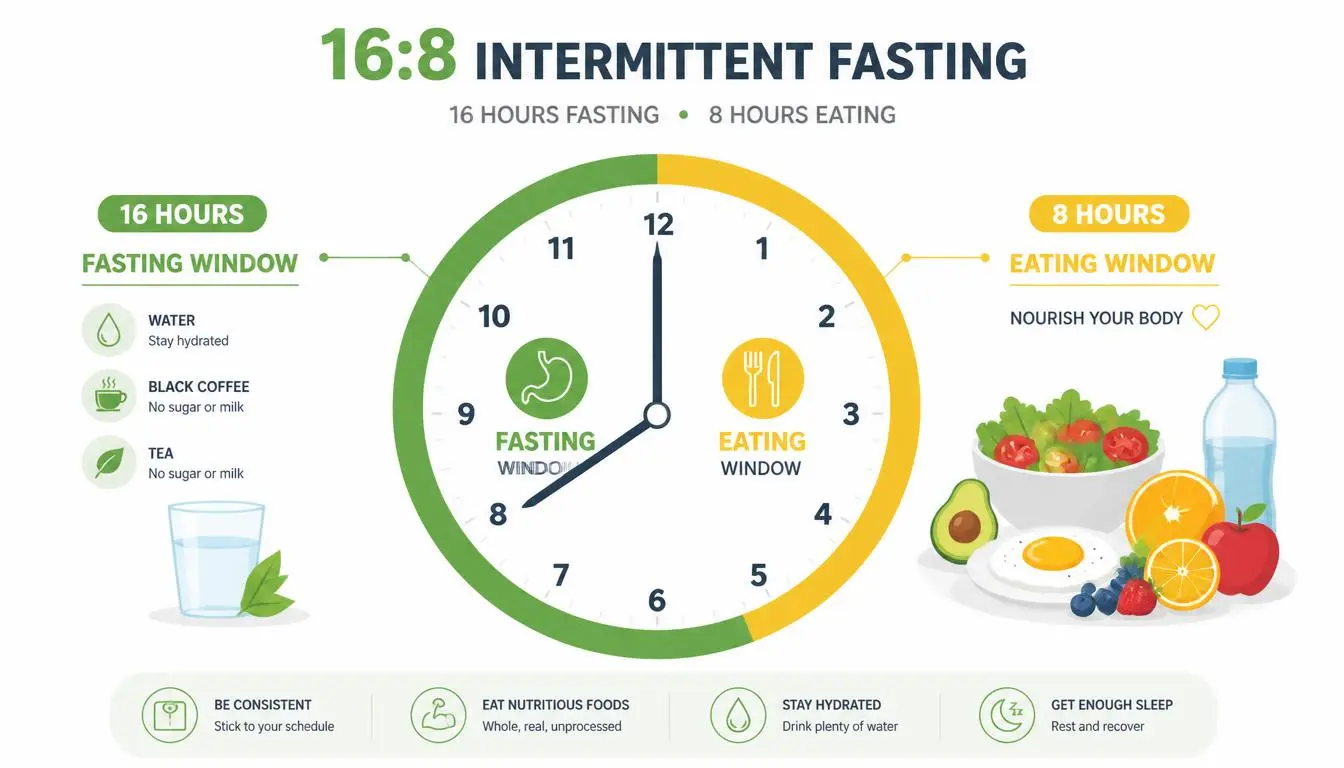
Unlike traditional diets that mainly focus on food choices, intermittent fasting is based on meal timing. Instead of eating throughout the day, you eat within a planned eating window and fast for the remaining hours. The goal isn’t to restrict specific foods but to follow a consistent eating routine that fits your lifestyle.
For a basic overview, see this NIDDK guide on intermittent fasting. Some of the most popular intermittent fasting methods include:
- 16:8 Method – Fast for 16 hours and eat within an 8-hour eating window.
- 14:10 Method – A beginner-friendly option with a shorter fasting period.
- 18:6 Method – A good choice for people who are already comfortable with fasting.
- 5:2 Diet – Follow your usual eating pattern on five days of the week, then limit your calorie intake on two separate, non-consecutive days.
Most beginners find 12:12 or 14:10 easier to start with. After a few weeks, you can try 16:8 if it feels comfortable and is safe for you.
Intermittent Fasting Before and After: What It Really Means
A before-and-after photo shows one thing: weight. Your body does more than that over a month. It adjusts hunger signals, meal timing, and how it uses stored energy.
The first week usually shows the biggest drop on the scale. When you eat fewer meals and fewer refined carbs, your body uses up some of its stored carbohydrate and releases the water held along with it. That is why a kilogram or two can disappear quickly. It is mostly water, not fat.
Fat loss is slower. It needs a modest calorie deficit over several weeks, and fasting only helps if it leads you to eat fewer calories overall. If you simply eat the same amount in a shorter window, the scale may barely move.
Why Are So Many People Trying Intermittent Fasting?
A few years ago, fitness enthusiasts mainly discussed intermittent fasting. Today, it’s followed by office workers, students, parents, and even busy entrepreneurs.
People often like it because:
- It can simplify meal planning.
- It may reduce unnecessary snacking.
- Some people report feeling more focused during fasting hours.
- It can fit into different lifestyles and cultures.
For many Indians, a structured eating window makes it easier to avoid late-night snacks and sugary tea multiple times a day. Globally, people appreciate that intermittent fasting doesn’t force them to eliminate their favorite foods. It mainly changes when you eat. If you get hungry between meals, these healthy snack bars can be a useful option inside your eating window.
Popularity does not mean it works for everyone. Research so far suggests intermittent fasting can help some people lose weight, mainly by helping them eat fewer calories, but it is not clearly better than other ways of eating less. The best approach is the one you can keep up safely.
Intermittent Fasting Before and After: Week by Week
Everyone’s body responds differently, but many beginners notice a similar rhythm during the first month.
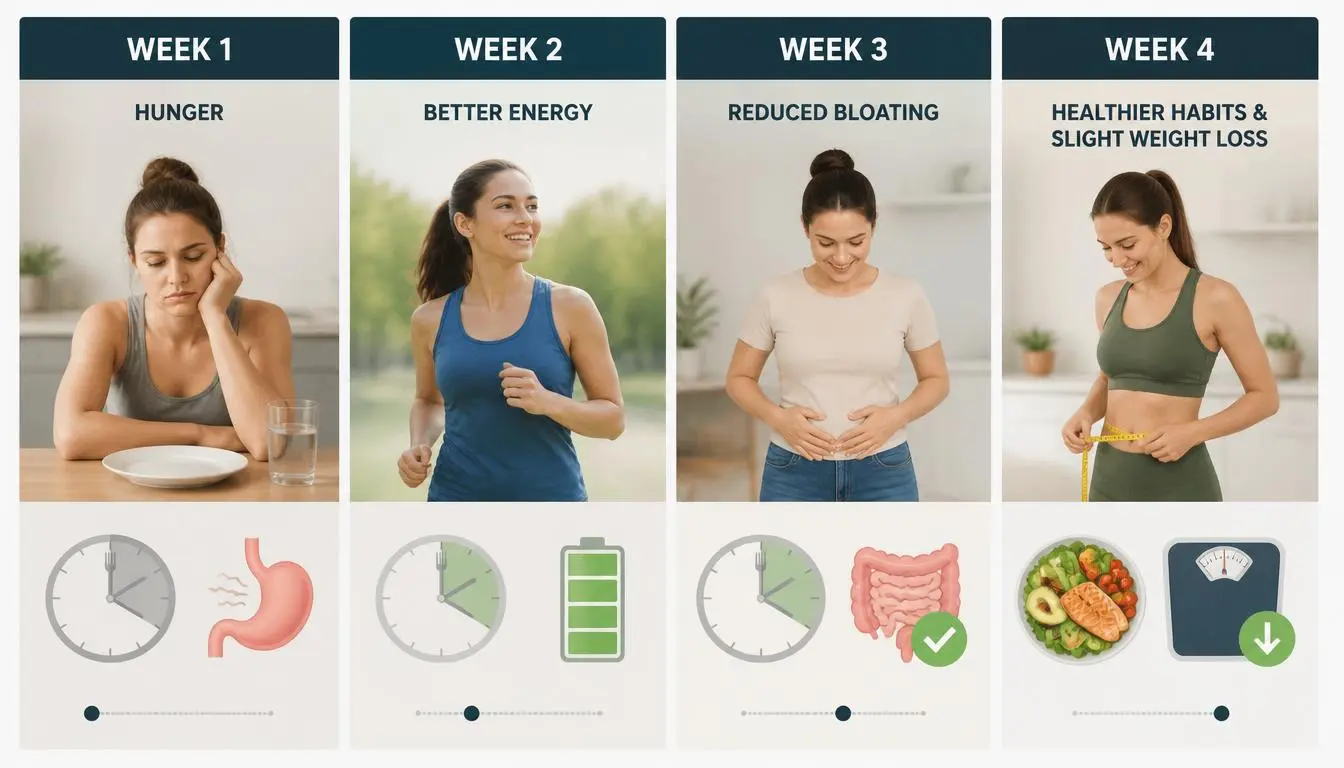
Typical pattern for many beginners. Individual results vary.
| Week | What the scale often does | Hunger and energy | An unrealistic expectation |
|---|---|---|---|
| Week 1 | A quick drop of about 1 to 2 kg, mostly water | Hunger at your old meal times, mild headaches or tiredness for some people | “I lost 2 kg of fat in a week” |
| Week 2 | Water loss slows, and the scale may stall or bounce | Hunger becomes more predictable, energy starts to steady | “The scale should drop every day” |
| Week 3 | Slow change if you are not overeating in your window | Many people notice steadier focus and less late-night snacking | “I should look visibly different by now” |
| Week 4 | A modest total change is common, and some people see very little | The routine feels normal, and planning meals replaces grazing | “One month means a dramatic photo” |
The pattern matters more than any single number. The scale moves most in week one because of water, and the real change is the slow part that continues past day 30.
Why the Scale Alone Can Mislead You
Your weight changes daily with water, salt, hormones, and digestion. A single reading can be up by a kilogram for reasons that have nothing to do with fat. A steadier approach is to note a few things once a week:
| What to note | How |
|---|---|
| Weight | Same time, same scale, light clothes (use the weekly average) |
| Waist | Measure at the navel with a tape |
| Clothes | Notice how your usual jeans or kurta feel |
| Energy and hunger | Rate each from 1 to 5 |
| Sleep | Roughly how many hours per night |
Healthy weight loss is generally gradual. The CDC notes that about 0.5 to 1 kg per week is easier to maintain than a rapid drop. Promises of losing 10 kg in 30 days are neither realistic nor safe for most people.
What Usually Changes, and What Usually Doesn’t
What often improves:
- Late-night snacking, because the eating window closes the kitchen for you
- Awareness of real hunger versus boredom or habit eating
- Afternoon energy, once your meals become more regular
- Sleep, for some people who stop eating a few hours before bed
What often stays the same after just 30 days:
- Visible body changes, which usually take longer than a month
- The number on the scale, if your total calories have not really changed
- Medical issues such as thyroid problems or the effect of medicines, which fasting will not fix on its own
Walking and Protein Protect Your Results
Fasting decides when you eat. What you do the rest of the day still matters. A 20 to 30-minute walk after a meal burns extra calories, helps steady blood sugar, and can calm cravings.
When you lose weight, some of it can come from muscle, so eat enough protein in your window, such as dal, eggs, paneer, curd, sprouts, fish, or chicken. A few bodyweight exercises like squats and push-ups twice a week help too. For high-protein snack ideas, see our guide on healthy protein snacks.
A Simple 14:10 Day With Indian Food
This is only an example. Change the times to fit your routine.
- 8:30 am: Breakfast, such as moong dal chilla with curd, or eggs with roti and vegetables
- 1:00 pm: Lunch, such as roti, dal, sabzi, salad, and curd
- 4:30 pm: Snack, such as roasted chana or a fruit
- 6:30 pm: Dinner, such as vegetable khichdi, or roti with paneer sabzi
- 6:30 pm to 8:30 am: Fasting window, with water, plain tea without sugar or milk, or black coffee
Which Schedule Should You Start With?
Most beginners find a 12:12 or 14:10 schedule easier than 16:8. After a few weeks, if you feel comfortable and have no health reason to avoid it, you can try a longer window. A routine you can keep for three months works better than an aggressive one you quit in week two.
If you are a woman with irregular periods or PCOS, read our guide on intermittent fasting for women first.
Tips for Better 30-Day Results
- Drink water throughout the day. Black coffee or plain tea without sugar or milk is fine inside your fasting window.
- Add fiber to your meals: oats, fruit, vegetables, beans, and whole grains help you feel full.
- Do not break your fast with a huge meal. Choose a balanced plate with protein, vegetables, and whole grains.
- Sleep 7 to 9 hours when you can. Poor sleep makes hunger harder to handle.
Common Beginner Mistakes
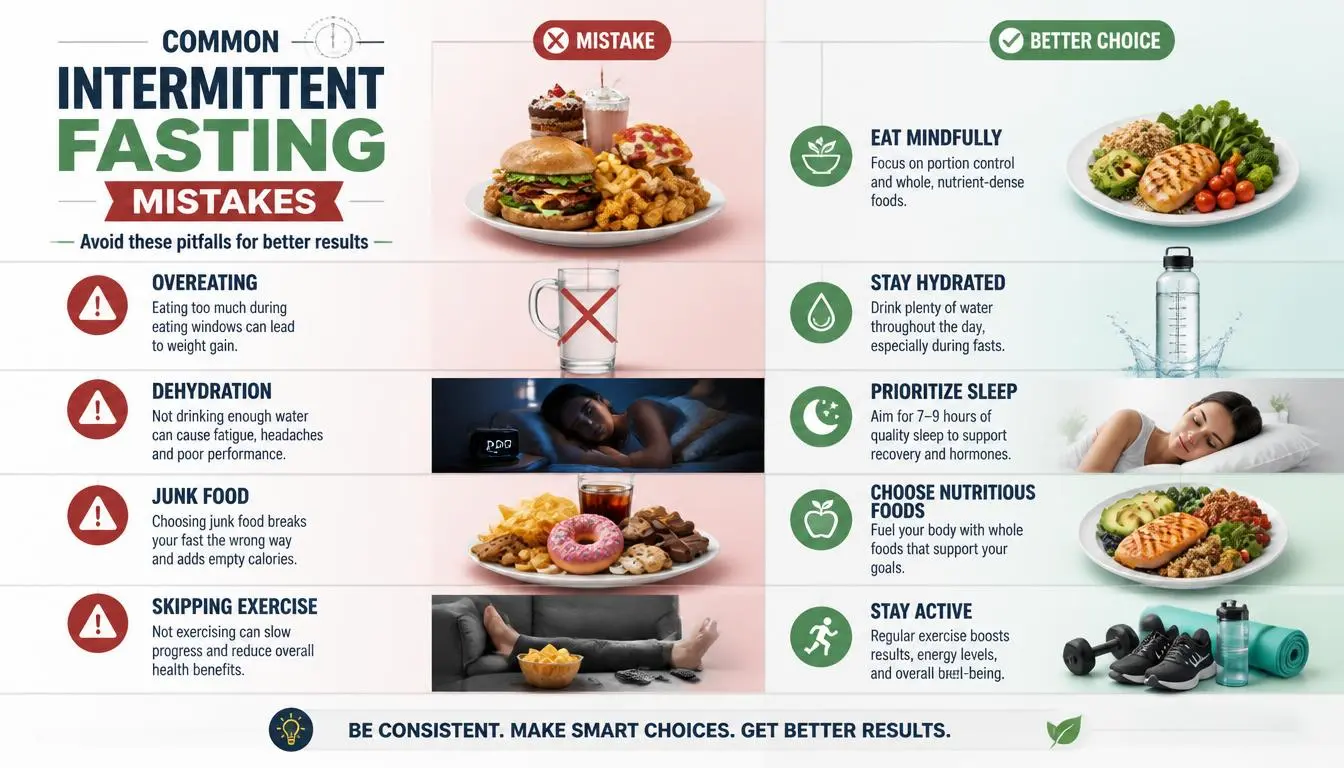
Most disappointing first months happen because of simple mistakes, not because fasting doesn’t work.
Skipping Water
Dehydration can make you feel hungry even when your body simply needs fluids.
Eating Too Much During Your Eating Window
Intermittent fasting isn’t permission to eat unlimited fast food.
Meal quality still matters.
Expecting Instant Results
Many people quit after one week because they don’t see dramatic changes.
Healthy progress takes time.
Ignoring Exercise
Walking, strength training, cycling, or yoga can complement intermittent fasting and support overall health.
Following Someone Else's Routine
A fasting schedule that works for your friend may not suit your work hours or lifestyle.
Choose a routine you can realistically follow for months—not just a few days.
Is Intermittent Fasting Safe?
For most healthy adults, intermittent fasting can be a safe eating pattern when followed correctly. However, it is not suitable for everyone.
If you have diabetes, take medications that affect blood sugar, are pregnant or breastfeeding, or have a history of eating disorders, talk to a qualified healthcare professional before starting intermittent fasting.
The goal is to improve your health—not to push your body beyond its limits.
Who Should Avoid Intermittent Fasting?
Intermittent fasting may not be the right choice for everyone.
You should seek medical advice before trying it if you:
- Are pregnant or breastfeeding
- Have Type 1 diabetes
- Have a history of eating disorders
- Are underweight
- Are recovering from major surgery or illness
- Take medications that require meals at specific times
- Are a teenager
Even if fasting works well for others, your health needs should always come first.
When to Stop Fasting
Mild hunger in the first week is normal. These symptoms are not. Stop fasting, eat something, and get medical advice if you feel dizzy or faint, have a racing heartbeat, feel confused, have severe weakness, or keep getting severe headaches. Do not push through these.
Final Thoughts on Intermittent Fasting Before and After
After the first 30 days, one thing becomes clear: lasting results come from consistency, not perfection.
Your first 30 days may not completely transform your body, but they can completely change your daily habits. You may snack less, feel more in control of your appetite, improve your meal timing, and build a routine that feels sustainable.
Whether you’re a busy office worker in Mumbai, a parent managing household responsibilities, or someone trying to balance work and family anywhere in the world, intermittent fasting can be a practical approach when paired with nutritious food, regular exercise, and enough sleep.
Instead of comparing your journey with someone else’s before-and-after photos, focus on becoming a little healthier each week. Those small improvements often lead to the biggest long-term changes.
Remember, the goal isn’t to complete a perfect 30 days. The goal is to build healthy habits that you can continue for months or even years. Small, consistent improvements almost always outperform short-term extreme diets.
Health Note: This article is for educational purposes only and is not a substitute for professional medical advice, diagnosis, or treatment. If you have diabetes, take medications that affect blood sugar, are pregnant or breastfeeding, or have any underlying medical condition, consult a qualified healthcare professional before starting intermittent fasting.
Frequently Asked Questions (FAQs)
What results can I expect after 30 days of intermittent fasting?
Results vary from person to person. Many people notice fewer late-night snacks and steadier meals, and some lose a few kilograms, mostly water in the first week. Big visible changes usually take longer than a month.
Is 30 days enough to lose weight with intermittent fasting?
Thirty days is enough to build a routine and see small changes on the scale, but not enough for a major transformation. About 0.5 to 1 kg per week is generally considered a safe pace, and some people lose less.
Which intermittent fasting schedule is best for beginners?
Most beginners find 12:12 or 14:10 easier to start with. If it feels comfortable after a few weeks, you can try 16:8.
Can I drink water during intermittent fasting?
Yes. Water is fine, and staying hydrated helps with hunger and headaches. Black coffee and plain tea without sugar or milk are generally accepted too.
What foods should I eat after breaking a fast?
Start with a balanced meal rather than a huge one: protein (dal, eggs, paneer, curd), vegetables, and whole grains like roti or brown rice. Avoid breaking your fast with a large portion of fried or sugary food.