

Intermittent Fasting for Women may seem straightforward—eat within a set time and avoid food for the remaining hours. In everyday life, however, maintaining a routine is not always easy. A woman may begin her morning by getting the kids ready for school, spend most of the day at work, manage responsibilities at home, miss a meal, and eventually crave biscuits, sweets, or a heavy dinner when the day catches up with her.
For many women in India and around the world, eating is not only about hunger. Busy routines, stress, emotional cravings, social gatherings, and poor sleep can influence both our eating patterns and food choices. That is why intermittent fasting can be appealing: it focuses on when you eat, rather than asking you to follow a complicated food list.
Still, women’s bodies have different nutritional and hormonal needs at different stages of life. Intermittent Fasting for Women should therefore be approached with flexibility, not as a race to fast for as many hours as possible.
In this guide, we’ll look at seven potential benefits, important risks, suitable fasting schedules, PCOS, periods, weight loss, pregnancy and breastfeeding precautions, and common mistakes to avoid.
Table of Contents
What Is Intermittent Fasting for Women?
Intermittent fasting is an eating pattern that alternates between periods of eating and fasting. It does not necessarily tell you which foods to eat; instead, it creates a defined eating window.
For women, common approaches include:
- 12:12: 12 hours fasting and 12 hours eating
- 14:10: 14 hours fasting and 10 hours eating
- 16:8: 16 hours fasting and 8 hours eating
For example, with a 14:10 schedule, you might finish dinner at 7:30 p.m. and have your first meal around 9:30 a.m. the following morning.
The best approach is usually the one that fits your lifestyle, energy needs, health status, and eating habits—not necessarily the one with the longest fasting period.
What Is the Best Intermittent Fasting Schedule for Women?
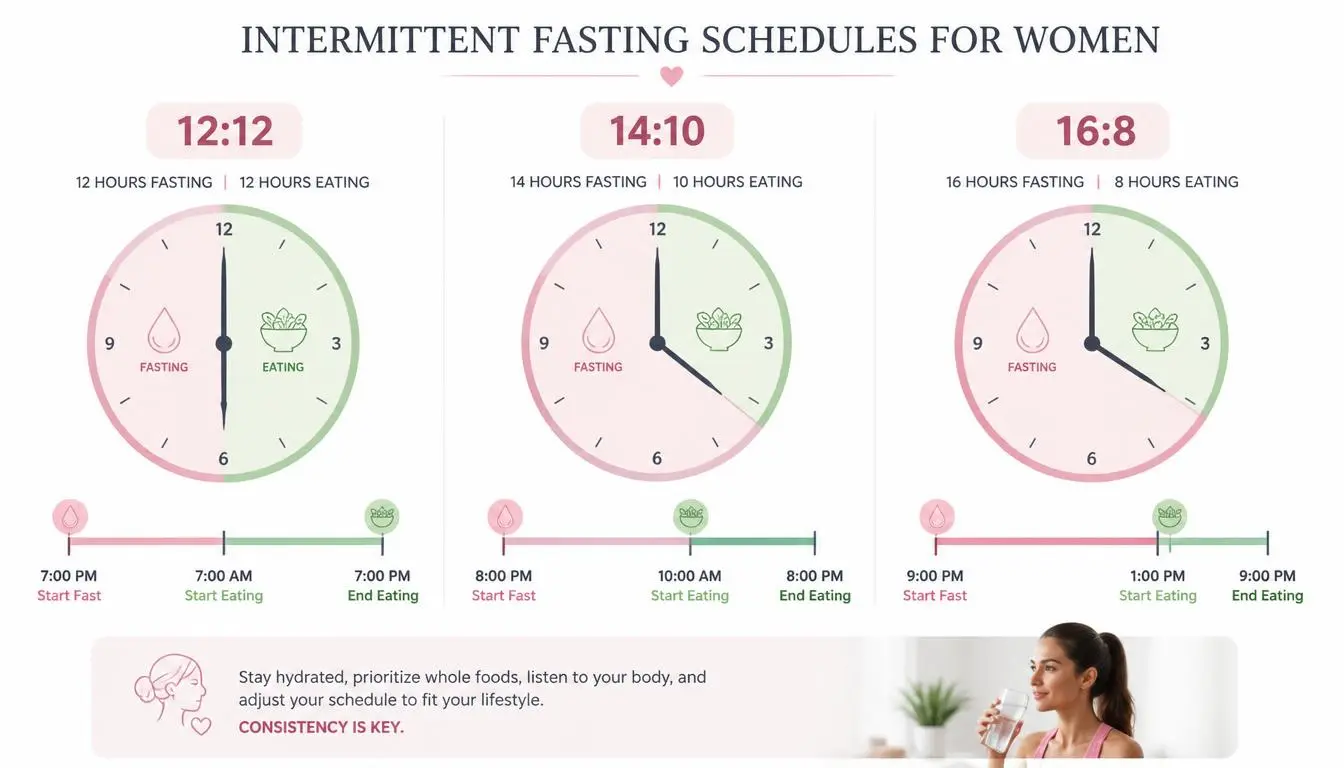
For beginners, a 12:12 or 14:10 schedule is often easier to manage than immediately starting with 16:8. Once you understand how your body responds, you can decide whether a longer fasting window feels comfortable and sustainable.
A woman working an office job might find 14:10 convenient, while someone with early morning workouts or a demanding physical routine may prefer a shorter fasting period.
7 Potential Benefits of Intermittent Fasting for Women

1. May Support Weight Loss
Weight loss is one of the biggest reasons women try intermittent fasting.
The eating window can naturally reduce frequent snacking and late-night eating. If fasting helps you consume fewer calories overall, it may support gradual weight loss.
However, fasting is not magic. Eating large portions of highly processed foods during the eating window can still make weight loss difficult.
A practical example: replacing a nightly habit of tea with biscuits, chips, or sweets with a structured eating schedule may reduce unnecessary calories without requiring a complicated diet.
2. May Improve Blood Sugar Control
Research suggests that time-restricted eating may help improve some measures of blood sugar regulation in certain people.
This may be particularly useful when fasting is combined with nutritious meals containing protein, vegetables, whole grains, legumes, and healthy fats.
For an Indian meal, that could mean dal, vegetables, roti, curd, eggs, paneer, or other protein-rich foods instead of relying heavily on refined snacks.
If you take diabetes medication, however, fasting should be discussed with your healthcare professional because medication and meal timing may need adjustment.
3. May Reduce Mindless Snacking
Honestly, sometimes the biggest benefit is simply creating boundaries around eating.
Many women don’t realize how often they eat because food is available all day—morning tea, office snacks, tasting food while cooking, evening chai, and something sweet after dinner.
A consistent eating window can make you more aware of these habits.
That doesn’t mean you should ignore genuine hunger. It means learning the difference between physical hunger and eating because food happens to be nearby.
4. May Support Metabolic Health
Some studies suggest time-restricted eating may have positive effects on certain metabolic markers, particularly when it also helps with weight management and overall diet quality.
The important point is that fasting should work with a healthy lifestyle, not replace one.
Regular movement, adequate sleep, nutritious food, and stress management still matter.
5. May Help Create a More Consistent Eating Routine
Women with unpredictable schedules often struggle with meal timing.
A reasonable fasting window can simplify the day. Instead of constantly deciding whether to snack, you have a clearer structure for meals.
For example:
8:30 a.m. — Breakfast
1:00 p.m. — Lunch
6:30 p.m. — Dinner
7:30 p.m. onward — Fasting
This isn’t a universal schedule, but it shows how simple the routine can be.
6. May Be Helpful for Some Women With PCOS
PCOS and weight management are closely connected for many women, and insulin resistance can be part of the picture.
Intermittent Fasting for Women with PCOS may help some women manage calorie intake and body weight, which can be beneficial for metabolic health. However, evidence specifically supporting intermittent fasting as a treatment for PCOS is still limited.
PCOS is not simply a weight problem. If you have irregular periods, excessive hair growth, acne, fertility concerns, or other symptoms, speak with a qualified healthcare professional rather than relying on fasting alone.
7. Can Encourage More Mindful Eating
Perhaps the most underrated benefit is awareness.
When your eating window becomes more structured, you may start noticing how sleep, stress, hunger, and food choices affect your energy.
That awareness can be more valuable than following a perfect fasting schedule.
Intermittent Fasting for Women and Hormonal Health
Hormonal health deserves special attention.
Women’s nutritional needs can change throughout the menstrual cycle and across different life stages. Some women feel perfectly comfortable fasting, while others notice increased hunger, tiredness, headaches, irritability, or difficulty concentrating.
There is no strong reason to assume that a longer fast automatically improves female hormones.
If fasting consistently makes you feel weak, affects your ability to function normally, or causes your eating pattern to become overly restrictive, it may not be the right strategy for you.
Intermittent Fasting for Women by Age

Age can make a difference in how a woman responds to intermittent fasting. Your energy needs, activity level, muscle mass, hormones, sleep, and overall health can change over time. Because of this, there is no single fasting schedule that works equally well for every woman.
Instead of choosing a fasting window based only on age, think about your individual needs and how you feel during the routine. A shorter fasting window may be perfectly effective for one woman, while another may prefer a more flexible approach.
Intermittent Fasting for Women in Their 30s
Women in their 30s may be balancing work, family responsibilities, exercise, and an increasingly busy schedule. Intermittent fasting can sometimes make eating more structured by reducing unnecessary snacking and late-night meals.
A gentle 12:12 or 14:10 schedule may be a practical starting point. The focus should be on eating enough nutritious food during the eating window rather than trying to fast for as long as possible.
Protein is especially important. Eggs, yogurt, paneer, fish, chicken, tofu, beans, and lentils can help provide protein while vegetables, fruits, whole grains, and healthy fats round out the diet.
If fasting leaves you unusually tired, affects your workouts, or makes it difficult to eat enough, shorten the fasting window or reconsider whether it suits your routine.
Intermittent Fasting for Women in Their 40s
During the 40s, some women begin experiencing changes in hormones, sleep, body composition, and appetite. These changes can make weight management feel different from previous years.
Intermittent fasting may still be useful if it helps create a consistent eating routine and reduces unnecessary snacking. However, fasting should not replace adequate nutrition.
Prioritize protein, fiber, vegetables, fruits, whole grains, and healthy fats. Strength training is also valuable because maintaining muscle becomes increasingly important with age.
A moderate approach such as 12:12 or 14:10 may be easier to maintain than aggressive fasting. If sleep, energy, or hunger becomes noticeably worse, your fasting window may be too restrictive.
Intermittent Fasting for Women Over 50
For women over 50, maintaining muscle, bone health, and overall nutritional quality becomes especially important. Menopause and postmenopause can also bring changes in body composition and where fat is stored.
If you choose intermittent fasting, avoid treating the eating window as an opportunity to eat as little as possible. Your meals still need to provide enough protein and essential nutrients.
Include foods such as eggs, dairy or fortified alternatives, fish, lean meats, beans, lentils, vegetables, fruits, nuts, seeds, and whole grains according to your dietary preferences.
A shorter or moderate fasting window may be more appropriate than prolonged fasting, particularly if you are physically active or have difficulty meeting your nutritional needs.
Women who take medications or manage conditions such as diabetes should discuss fasting with their healthcare professional before changing their meal schedule.
Intermittent Fasting for Women Over 60
For women over 60, nutrition and muscle preservation should remain a priority. The goal of intermittent fasting should not simply be to reduce the number of hours you eat.
Women over 60 may need to pay closer attention to getting enough protein, fluids, vitamins, minerals, and overall calories. A very restrictive eating window can make it harder to meet those needs.
If fasting is comfortable and medically appropriate, a gentle schedule such as 12:12 may be easier to manage than longer fasting periods. Regular meals may also be a better choice for some women.
If you have diabetes, take medications that need to be taken with food, have a low body weight, or have another medical condition, speak with your healthcare professional before starting intermittent fasting.
What Matters Most at Any Age
There is no rule saying that women should fast for a specific number of hours simply because they have reached a certain age. Your health, medications, activity level, nutritional needs, sleep, and how you actually feel are more important than the number on your birthday.
For many women, starting with a gentle 12:12 schedule and adjusting gradually can be more practical than jumping into a strict fasting routine.
The best fasting plan is one that supports your health and daily life without leaving you consistently weak, overly hungry, or unable to meet your nutritional needs.
Periods and Fasting: Should Women Fast During Their Cycle?

Some women can comfortably continue a moderate fasting routine during their periods, while others prefer shorter fasting windows.
There is no universal rule that every woman must fast—or must stop fasting—during menstruation.
Pay attention to symptoms such as unusual fatigue, dizziness, headaches, or worsening weakness. During your period, prioritize adequate food, fluids, iron-rich foods, protein, and overall nutrition.
If your periods are very heavy, irregular, or associated with significant weakness, speak with a healthcare professional before experimenting with longer fasting windows.
Pregnancy and Breastfeeding: Important Precautions

Pregnancy is not the time to experiment with intermittent fasting for weight loss unless specifically recommended and monitored by your healthcare team.
Pregnant women need adequate energy and nutrients to support both their own health and the developing baby.
Breastfeeding can also increase nutritional and fluid requirements. Restricting food unnecessarily may make it harder to meet those needs.
Therefore, during pregnancy or breastfeeding, discuss any fasting plan with your doctor or registered dietitian first.
Common Mistakes Women Make With Intermittent Fasting
Fasting for Too Long Too Soon
Starting directly with a 16:8 fast—or an even longer fast—can be uncomfortable for beginners.
Starting with 12:12 gives you time to understand how your body responds.
Eating Too Little Protein
A short eating window is not a reason to ignore protein.
Include foods such as eggs, fish, chicken, paneer, curd, milk, tofu, beans, lentils, and other protein-rich options according to your dietary preferences.
Treating the Eating Window Like a Free-For-All
Fasting does not cancel out nutrition.
If the eating window becomes a cycle of pizza, sweets, fried snacks, and sugary drinks, you may miss out on important nutrients.
Ignoring Hunger and Warning Signs
There is a difference between mild hunger and feeling genuinely unwell.
Persistent dizziness, faintness, severe weakness, or other concerning symptoms should not be ignored simply because you are trying to complete a fast.
Forgetting Hydration
During fasting, staying hydrated is important. Water should generally be your main drink. Depending on your health needs and fasting approach, unsweetened beverages may also fit your routine.
Practical Tips for Safer Intermittent Fasting

If you want to try Intermittent Fasting for Women, keep the first few weeks simple:
- Start gradually. Try 12:12 before considering 14:10 or 16:8.
- Build meals around protein. It can help make meals more satisfying.
- Eat vegetables and whole foods regularly. Don’t let the eating window become nutritionally poor.
- Drink enough water.
- Avoid making up for fasting with huge meals.
- Protect your sleep. Poor sleep can increase hunger and cravings.
- Stay active. Walking and strength training can complement a healthy eating pattern.
- Listen to your body. Your routine may need to change during illness, intense training, menstruation, pregnancy, or breastfeeding.
Who Should Be More Careful With Intermittent Fasting?
Intermittent Fasting for Women is not appropriate for everyone.
Extra caution is needed if you are pregnant or breastfeeding, have a history of an eating disorder, have diabetes or take blood-sugar-lowering medication, are underweight, or have another medical condition that affects nutrition or meal timing.
Teenagers should also not begin restrictive fasting for weight loss without professional guidance because their bodies are still developing.
If you take regular medication or have a medical condition, ask your healthcare professional whether fasting is appropriate before starting.
Final Thoughts on Intermittent Fasting for Women
Intermittent Fasting for Women can be a useful eating pattern for some women, particularly when it makes their daily routine simpler and supports healthier food choices. But it should never become a competition to see who can go the longest without eating.
A gentle 12:12 routine may be enough for one woman. Another may comfortably follow 14:10 or 16:8. And someone else may discover that regular meals work better for her body and lifestyle.
The goal is not to force your body into a schedule. The goal is to find an eating pattern that supports your health, energy, nutrition, and everyday life.
Start small, pay attention to how you feel, and make adjustments when necessary. If you have PCOS, diabetes, are pregnant or breastfeeding, or have another medical concern, get professional advice before starting a fasting routine.
FAQs About Intermittent Fasting for Women
Item #1
Is 16:8 intermittent fasting safe for women?
It can be suitable for some healthy adult women, but it is not automatically the best option for everyone. Beginners may find 12:12 or 14:10 easier and more sustainable.
Item #2
Can intermittent fasting help women lose belly fat?
Intermittent fasting may support overall weight loss when it helps create a calorie deficit. However, you cannot specifically choose where your body loses fat, so fasting does not directly target belly fat.
Item #3
Is intermittent fasting good for PCOS?
It may help some women with PCOS manage body weight and metabolic health, but research specifically on intermittent fasting for PCOS remains limited. It should not replace medical treatment.
Item #4
Can women fast during their periods?
Some women can, while others feel better with shorter fasting windows or normal meal timing. Energy levels, symptoms, and nutritional needs should guide the decision.
Item #5
What should women eat after fasting?
Start with a balanced meal containing protein, fiber-rich carbohydrates, vegetables or fruit, and healthy fats. Eggs with whole-grain toast and vegetables, or dal with roti and vegetables, are simple examples.
Item #6
Can intermittent fasting affect hormones?
Hormonal responses can vary between women. Very restrictive fasting or inadequate calorie intake may be problematic, so longer fasting is not necessarily better for hormonal health.